 Gemma
Gemma 
Welcome to Day 11 of Blogmas At Home 2025! 🎄🎀✨
And welcome to the latest, festive instalment of my Baking Around the World series, where I (attempt to) bake delicious, sweet treats from around the globe, in an effort to broaden my foodie horizons!
This time, we’re heading back to Sweden! I’ve already made one bake from Sweden (jordgubbstårta, a light and airy cake filled with pastry cream and strawberries), but I love making festive cookies from around the world this time of year, so I decided to try out these schackrutor (‘chess squares’) too.
A quick Baking Around the World disclaimer before we get into the recipe:

While I have done/will do extensive research for each of the recipes in this series, the recipes are unlikely to be 100% authentic because of differences in ingredient availability, variations within families/regions and multiple other reasons. I'm so sorry if I absolutely butcher your favourite childhood treat (and please let me know in the comments if I have made any unforgiveable errors), but please do give me the benefit of the doubt here- I am just a baker with a serious sweet tooth, trying to broaden her baking (and cultural) horizons through tasty snacks :)
Table of Contents
- Schackrutor: Explained
- Ingredients
- Making the Dough
- Shaping the Dough
- Slicing and Baking the Cookies
- Storage Instructions
- Final Thoughts
- Recipe
- Sources Used
Schackrutor: Explained
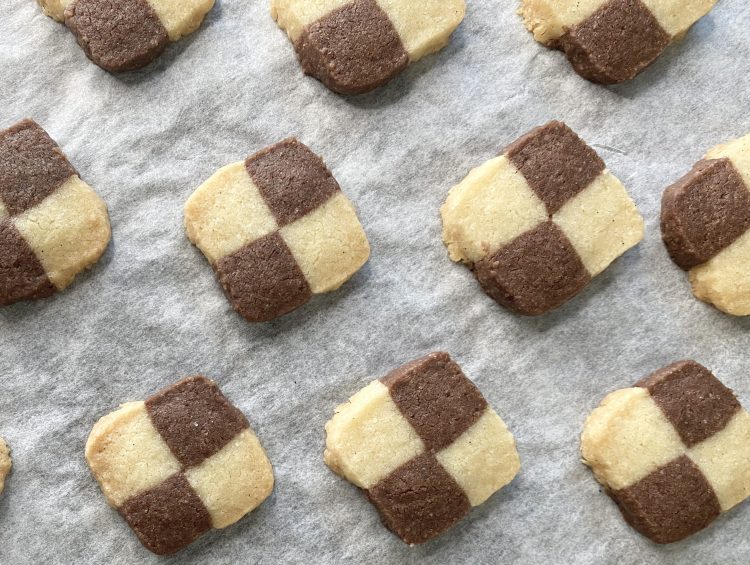
Schackrutor are bitesize, shortbread-style biscuits that are made with two flavours of dough (vanilla and chocolate), which are pieced together to create a (typically) 2×2 checkerboard (hence the name, which means ‘chess squares’). Checkerboard cookies are popular all over the world, but it seems that schackrutor were where it all began!
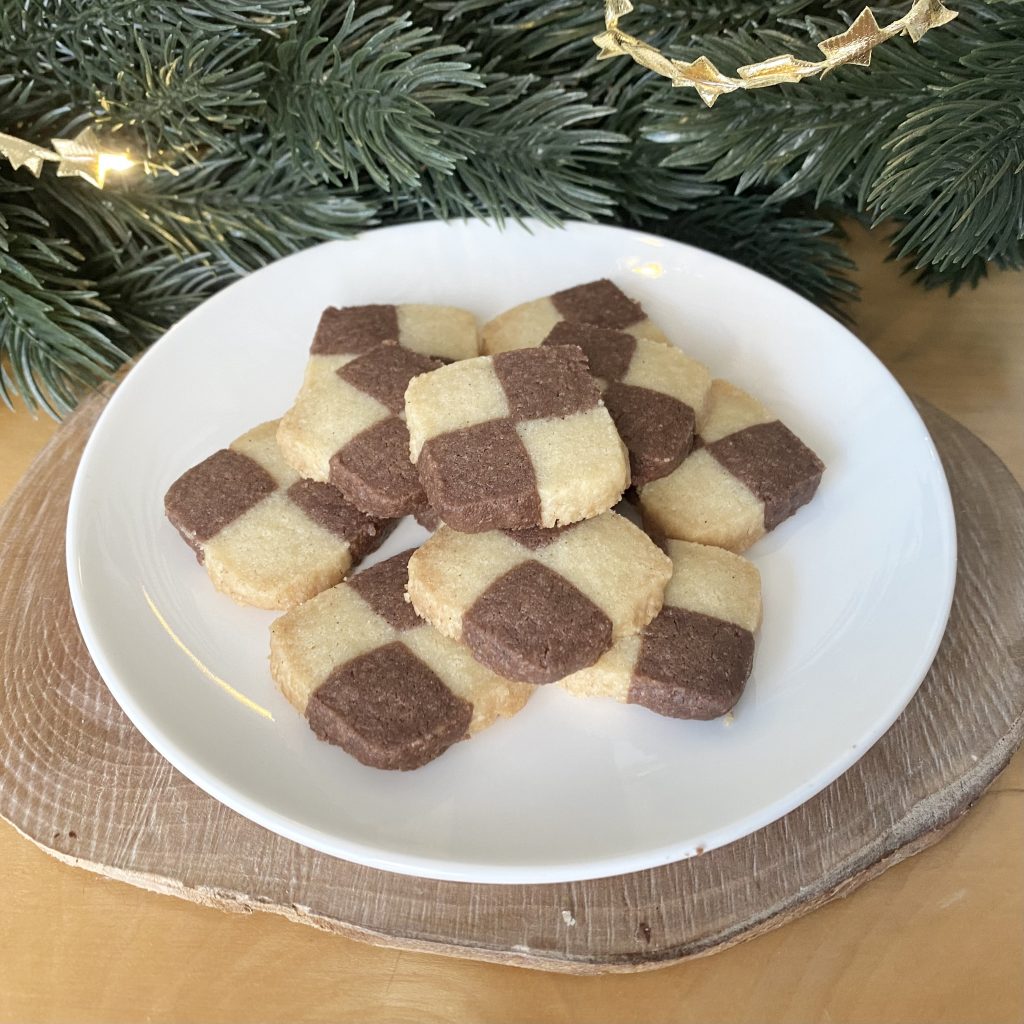
These cookies aren’t restricted to being a ‘Christmas cookie’, but I think they make such a lovely festive treat, especially if you have any friends/family members who aren’t a fan of the more traditional Christmas flavours (think nuts, oranges and dried fruits!).
Schackrutor are often served in Sweden for fika (a social coffee break steeped in rich tradition), sometimes are part of the ‘sju sorters kakor’ (‘seven types of cookie’) custom. Apparently, seven is considered the ideal number for cookies at a gathering, because any less would be ‘stingy’ and any more would be ‘over the top’! To save time, one dough is often used to make multiple different types of biscuits, sometimes called ‘1-2-3 Cookies’, (because of the proportions of the ingredients in the dough: 1 : 2 : 3 of sugar : butter : flour!) and this is the dough we’ll be making today.
Ingredients
You only need 5 ingredients to make schackrutor. The basic dough itself only requires 3 ingredients, while the 2 remaining ingredients provide the chocolate and vanilla flavour.

- Caster sugar
I used golden caster sugar, but white caster sugar will also work.
- Salted butter
I discovered in my research for the jordgubbstårta that the majority of the butter available in Swedish supermarket tends to be salted, so I’ve used salted butter here in an attempt to be more authentic! It’s great, because then you don’t have to worry about adding any salt yourself! If you only have unsalted butter, I’d recommend adding a generous pinch of fine sea salt to your flour at the beginning of the recipe. Your butter needs to be at room temperature (or slightly softened, if your house is chilly!).
- Plain flour
It’s important to use plain flour (not self-raising) for this recipe, because you don’t want the biscuits to rise— you want them to be short and crumbly!
- Vanilla bean paste
In Sweden, vanilla flavour is usually imparted via the addition of a store-bought product called vaniljsocker (‘vanilla sugar’). This ingredient is not readily available here in the UK, so I’ve used vanilla bean paste instead. I like using the paste because it imparts a lovely vanilla flavour without adding too much liquid to the dough (and you can see all the tiny vanilla bean specks in the cookies!).
- Cocoa powder
A small amount of cocoa powder is added to half of the dough to give it a chocolate-y flavour and a deep brown colour, which contrasts nicely with the vanilla dough and helps the checkerboard design to really stand out.
Making the Dough
Schackrutor dough is really easy to make: I do it in the food processor (because the cookies are so tiny, you only need a small amount of dough, so I do it in my mini food processor. You could easily scale the recipe up and make loads of biscuits, though!).
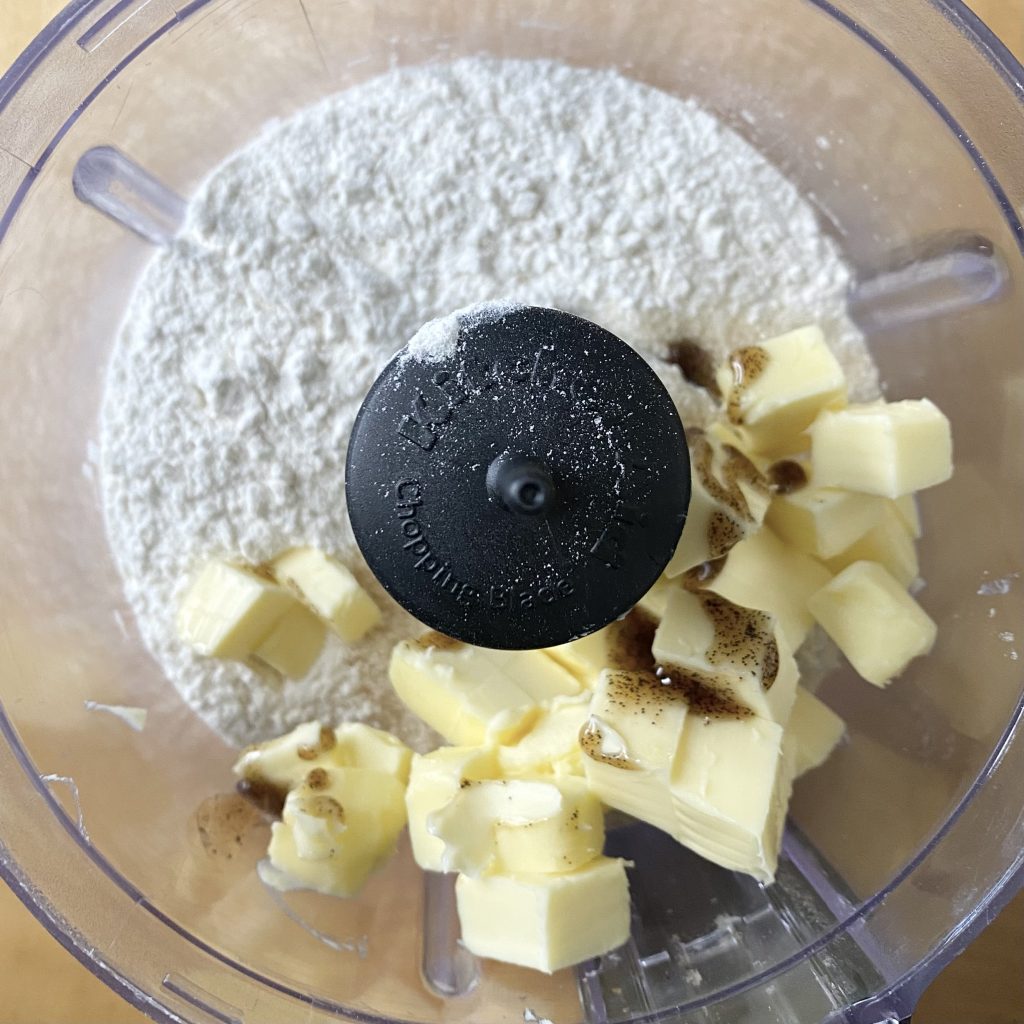
Place the caster sugar, softened butter, plain flour and vanilla bean paste into the food processor.
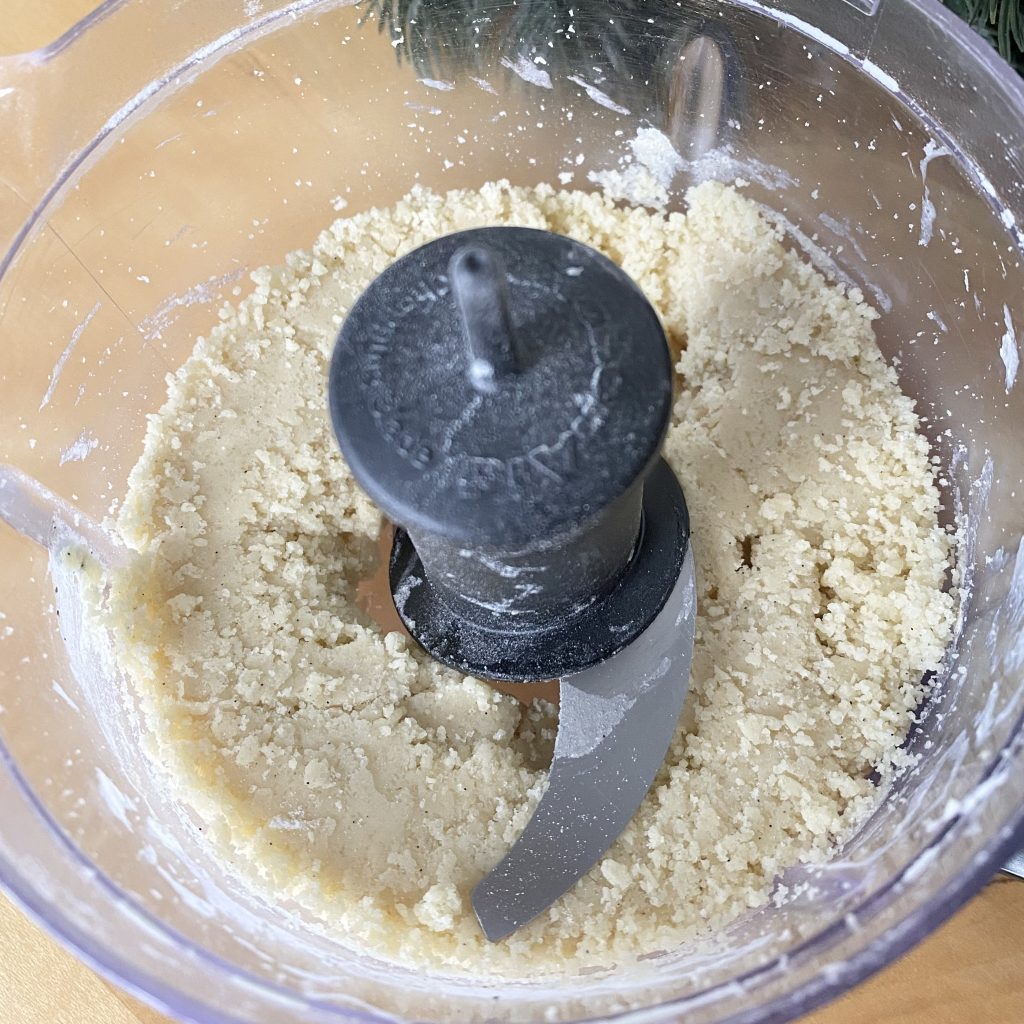
Pulse everything together until it comes together into a dough… and that’s the dough made!

Tip the dough out onto a clean work surface.
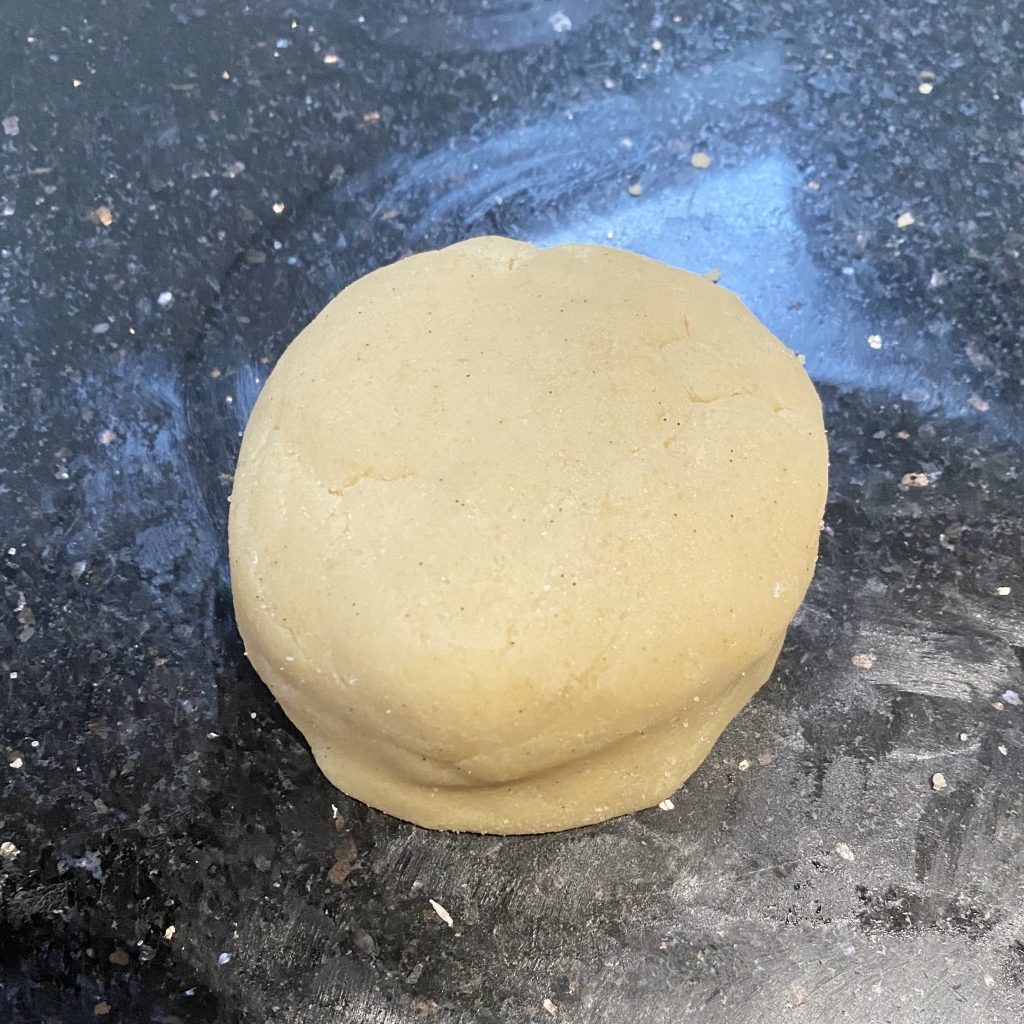
Then give it a little knead to bring it together into a smooth ball.
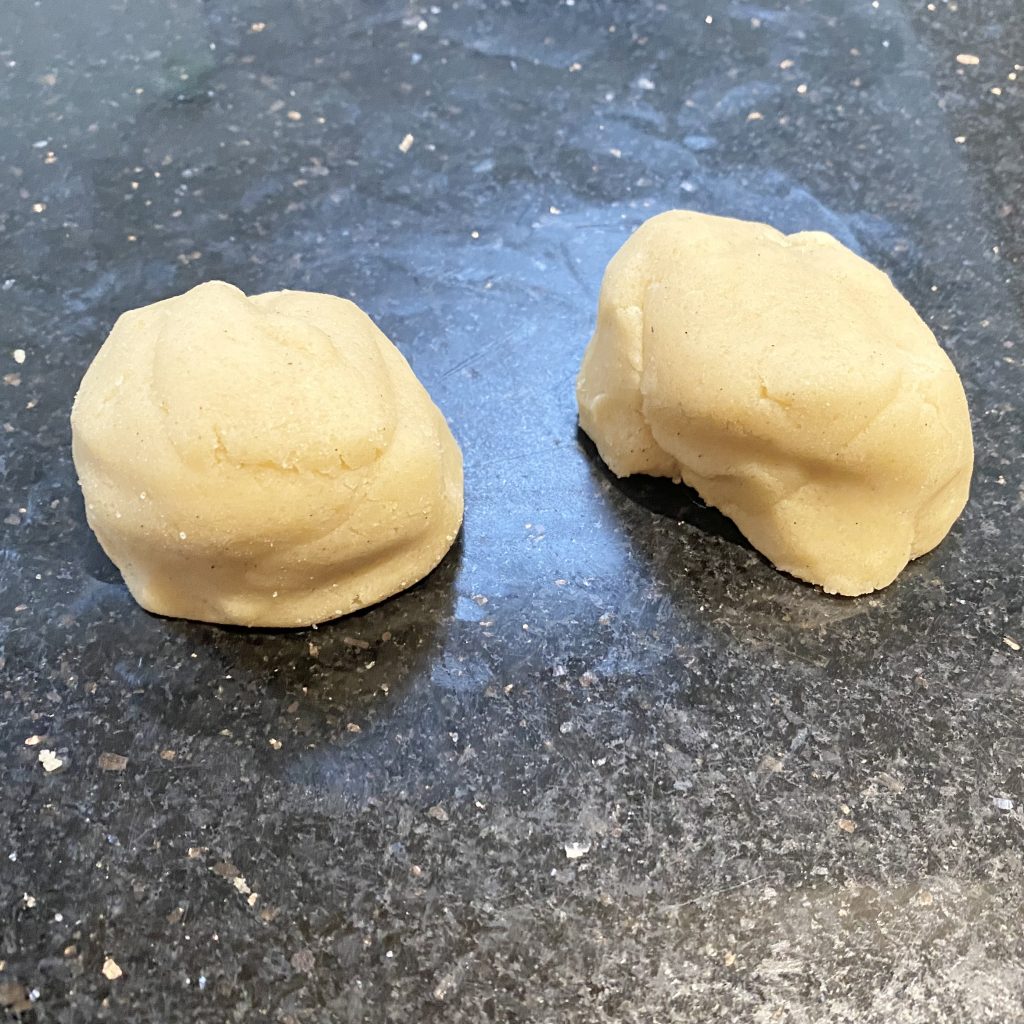
At this point, you need to weigh the dough, so that you can split it in half evenly. You can eyeball this, but you’ll get the neatest, most even cookies if you weight it! Weigh the whole ball of dough, then divide that number by 2 and split the dough into two equal balls, each weighing that final amount.
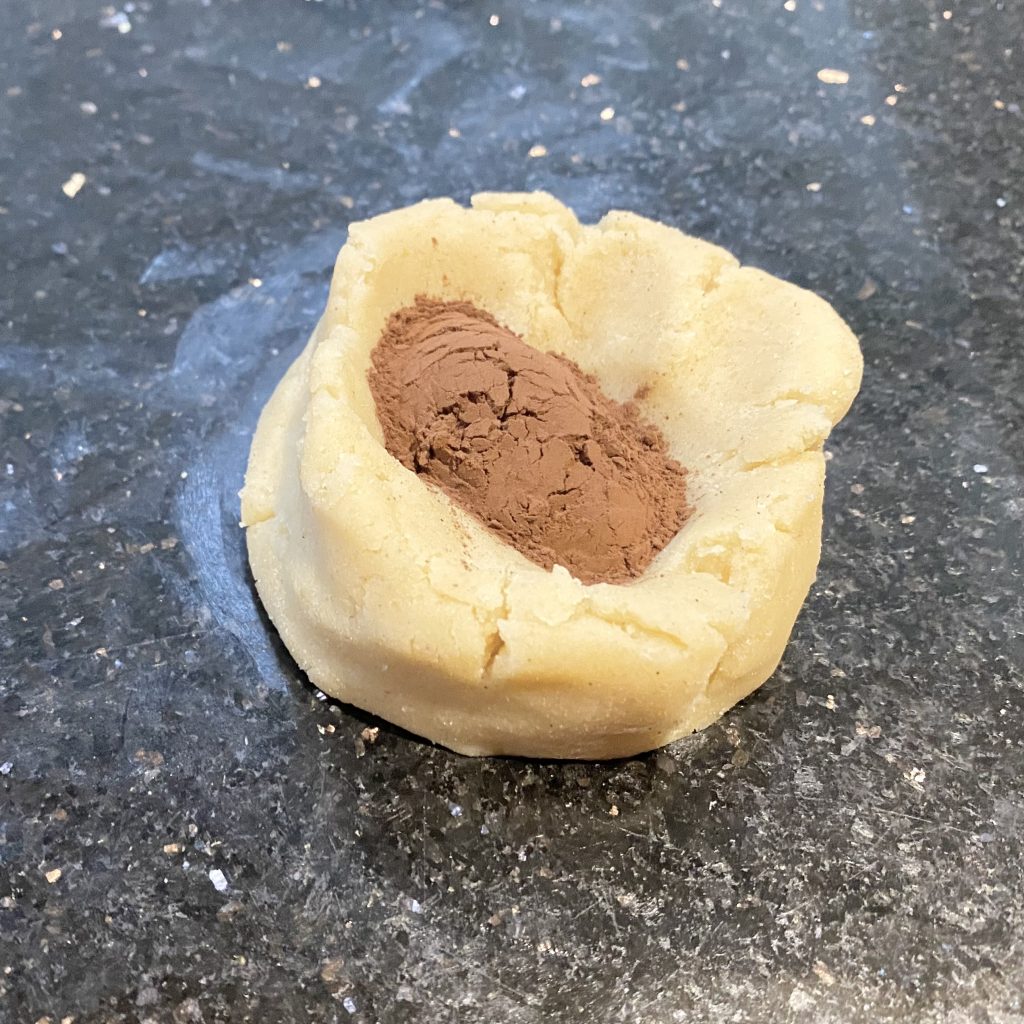
Now you need to add the cocoa powder to one of the dough balls. I like to knead it in by hand, until no streaks of vanilla dough remain, so that I can make sure it’s really well incorporated! It’s a little messy, but all the best things are.
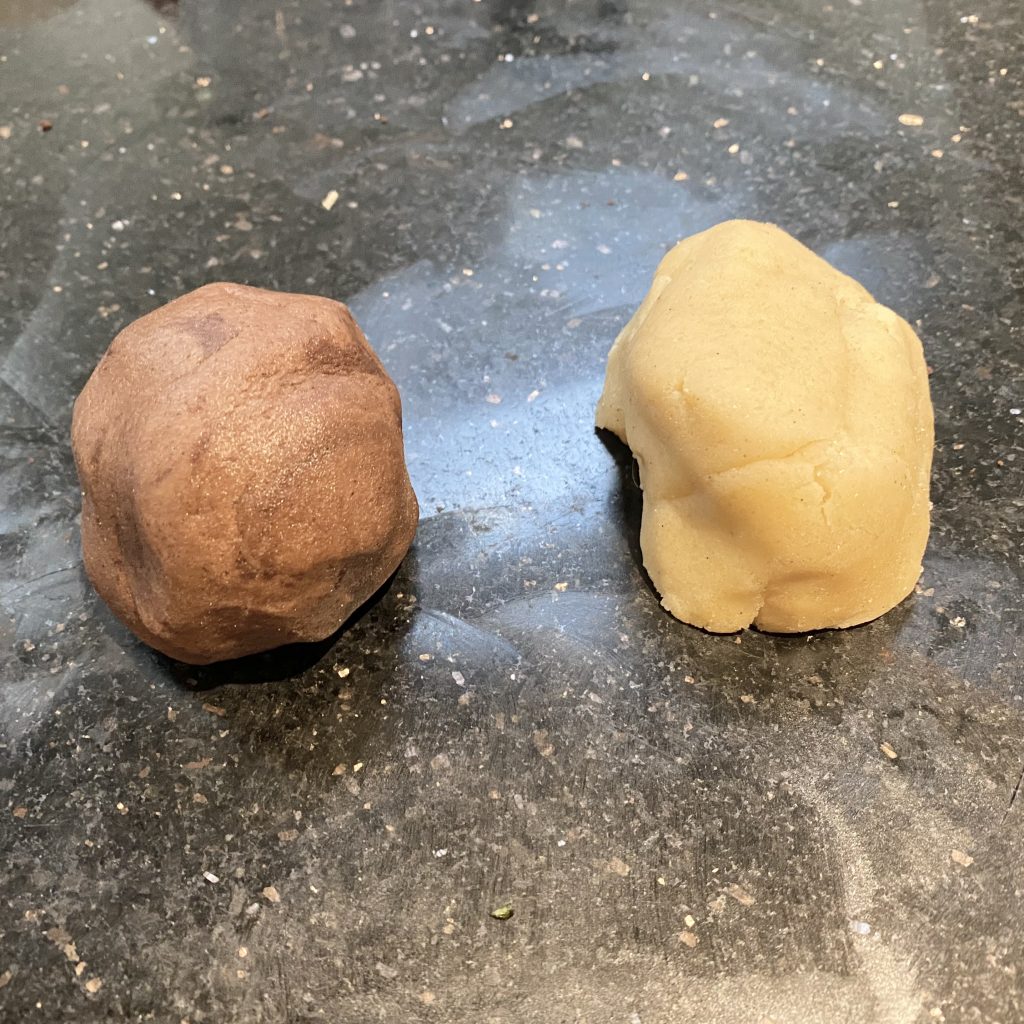
Once you have two balls of dough: one chocolate and one vanilla, you’re ready to shape the dough into the classic checkerboard design!
Shaping the Dough
Now it’s time to make the schackrutor log (though it’s really more of a cuboid, which is what gives these biscuits their classic, square shape when sliced!).
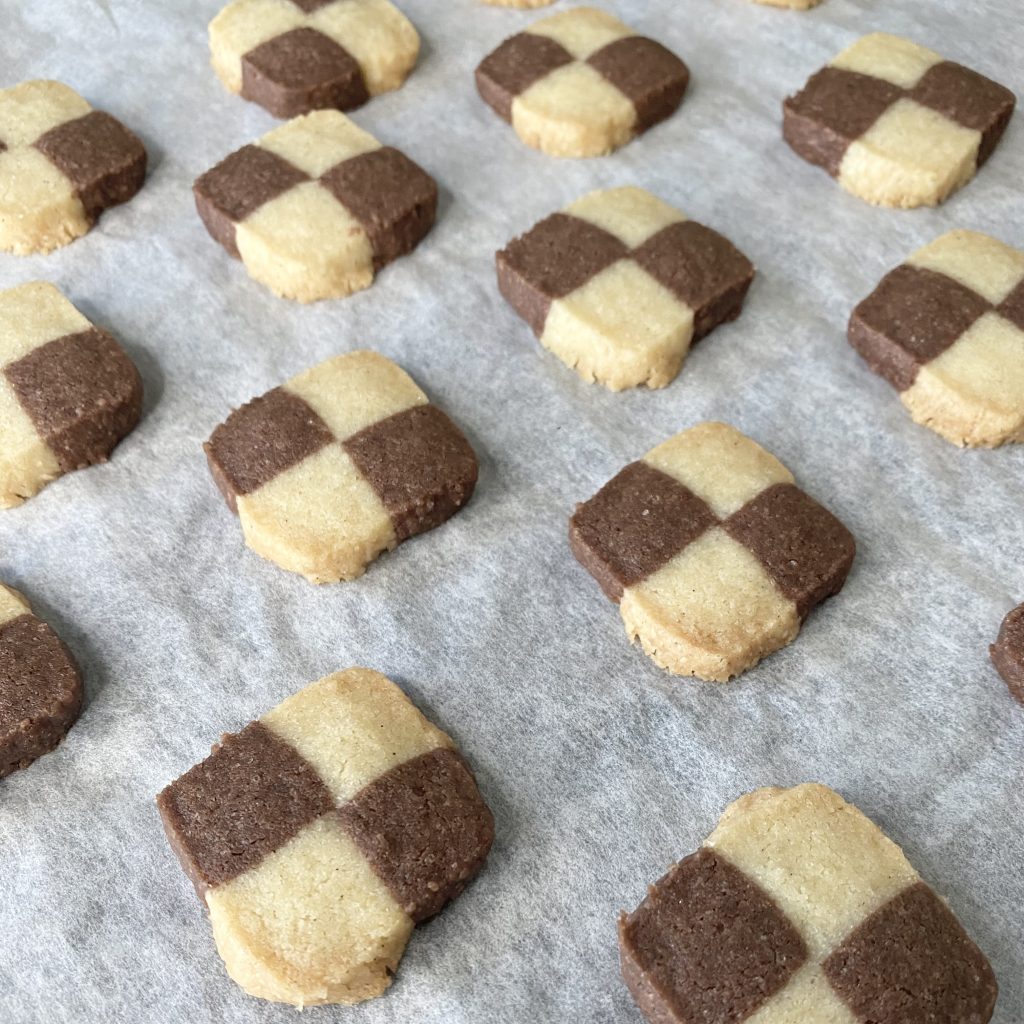
The log is made up of four smaller logs (also cuboids): two vanilla and two chocolate, which are pressed together to form the checkerboard design.
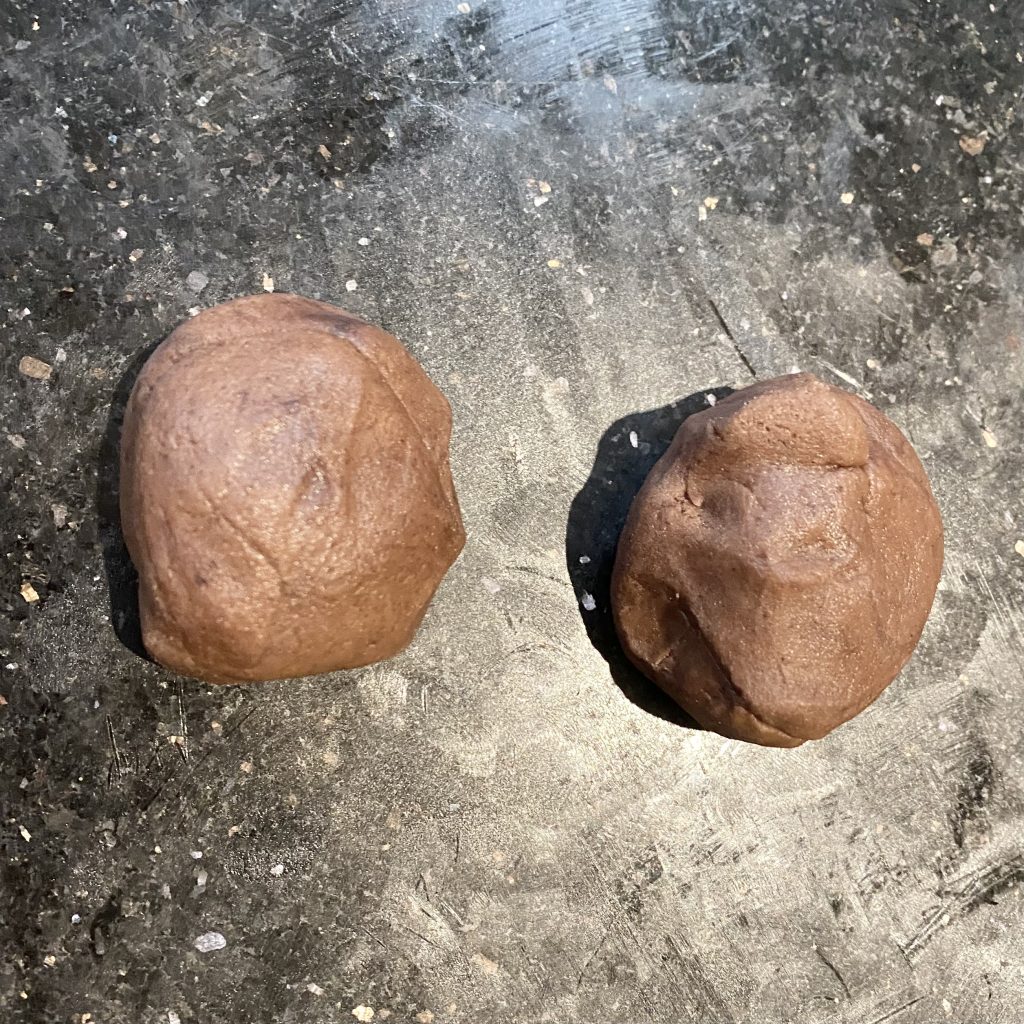
Take one of your dough halves (I’m working with the chocolate dough first here) and divide it in half again, so you have two equal balls of dough (it helps to weigh and divide the dough by 2 here, just like last time, to ensure they’re perfectly even!).
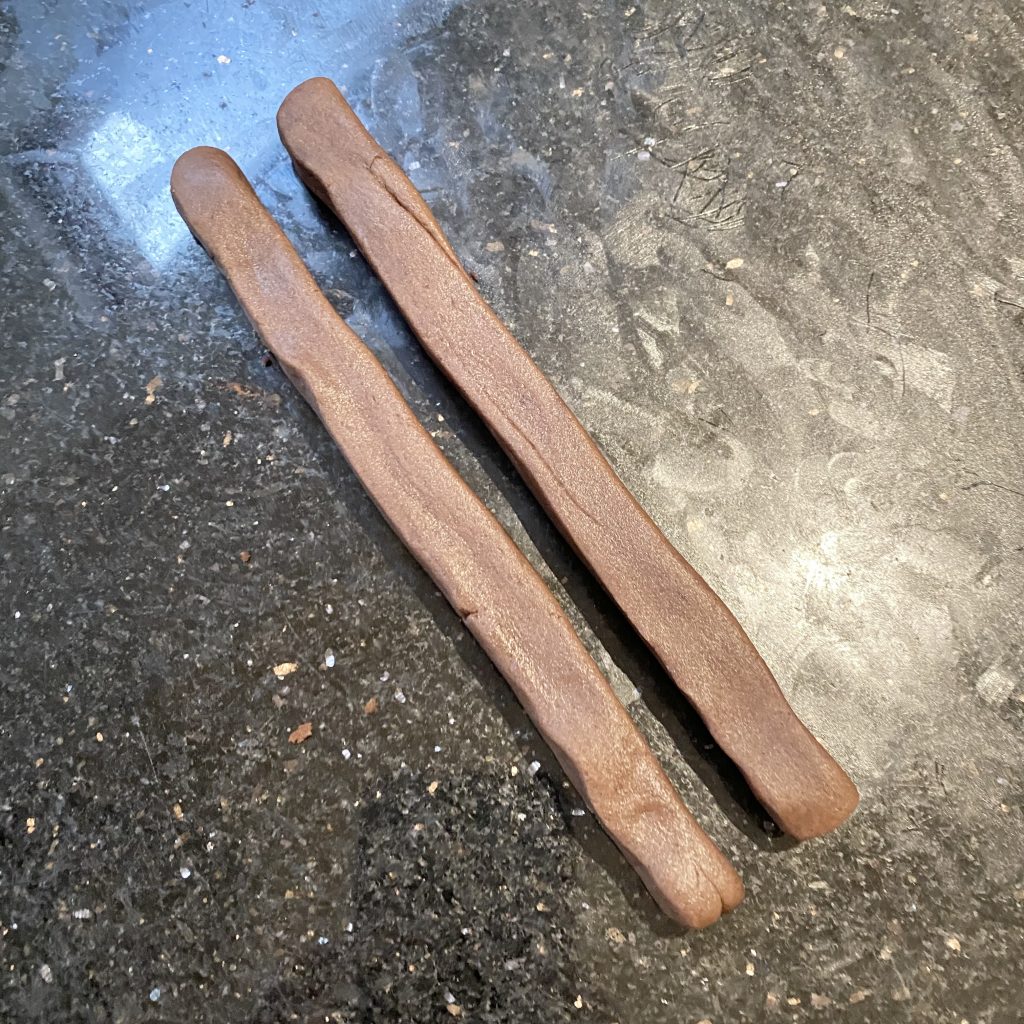
Take one of the dough balls and form it into a thin, rectangular log. The aim is for the cross section of the log to be a 1 x 1 cm square (mine ended up about 17cm long). I used my hands to press the dough into a rough log, then tapped all of the sides with a bench scraper, turning the log as I went, to get those square edges.
Repeat this process for the second dough ball, making a square log as similar to the first as you can! Things might be getting a little sticky at this point, but it’s important that you don’t add any extra flour/cocoa powder, because the logs need to be tacky enough to stick to each other later on. If things get unbearably sticky, I’d recommend just washing down your work surface and utensils before getting going again (almost like a stickiness reset!).
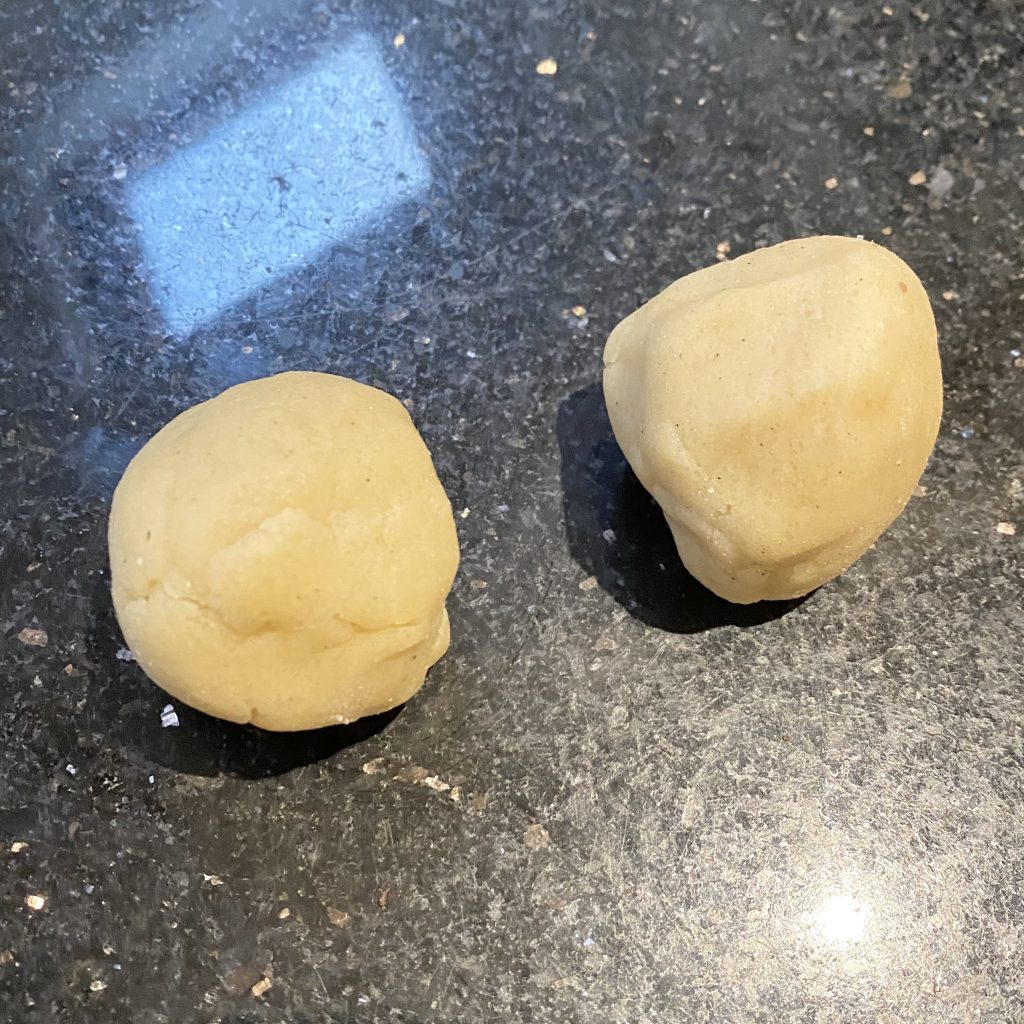
Once you have your two chocolate logs, repeat the whole process for the vanilla dough. I’d recommend wiping down your work surface before you do this, to make sure you don’t get any streaks of cocoa in your vanilla dough. Because of the added cocoa powder in the chocolate dough, you might find that the vanilla dough is slightly softer/stickier, but don’t worry— it’ll bake up perfectly!
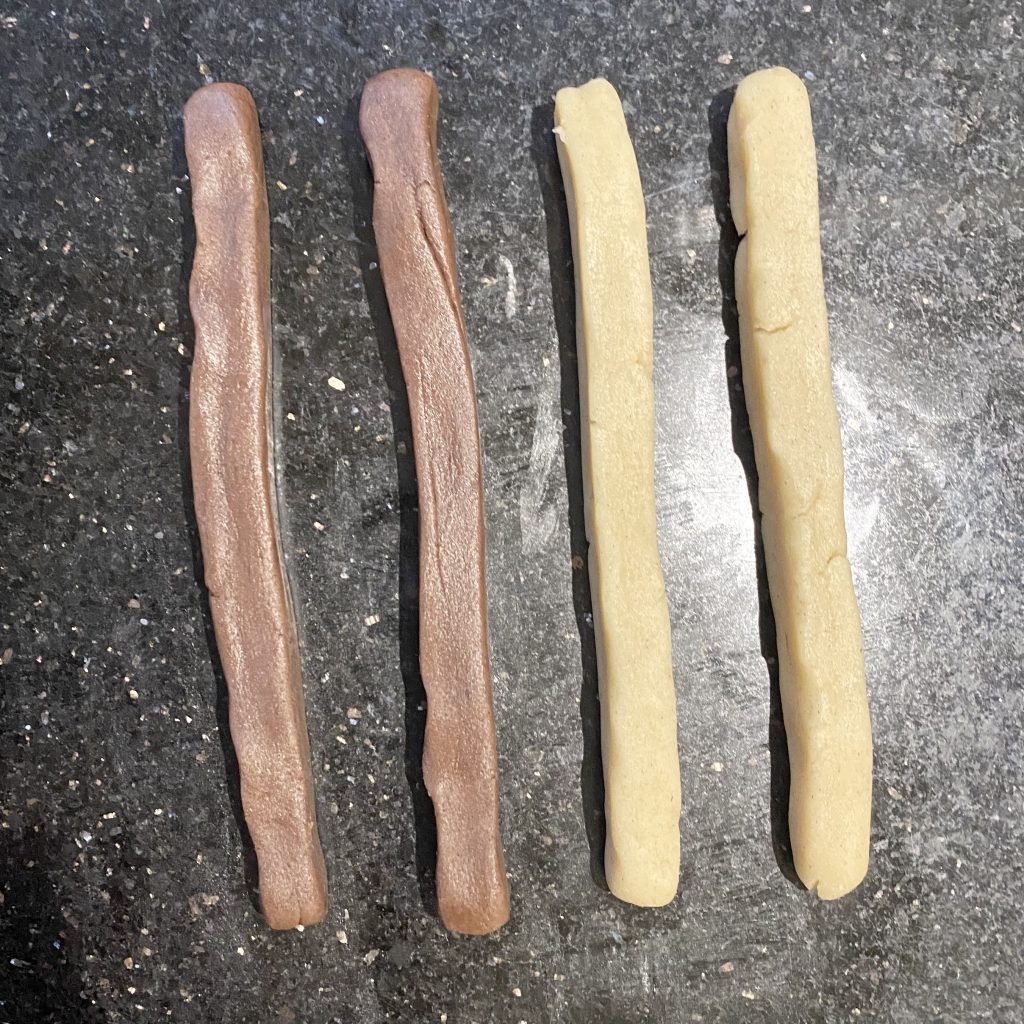
Once you have all four of the logs ready to go, you can form the checkerboard design.
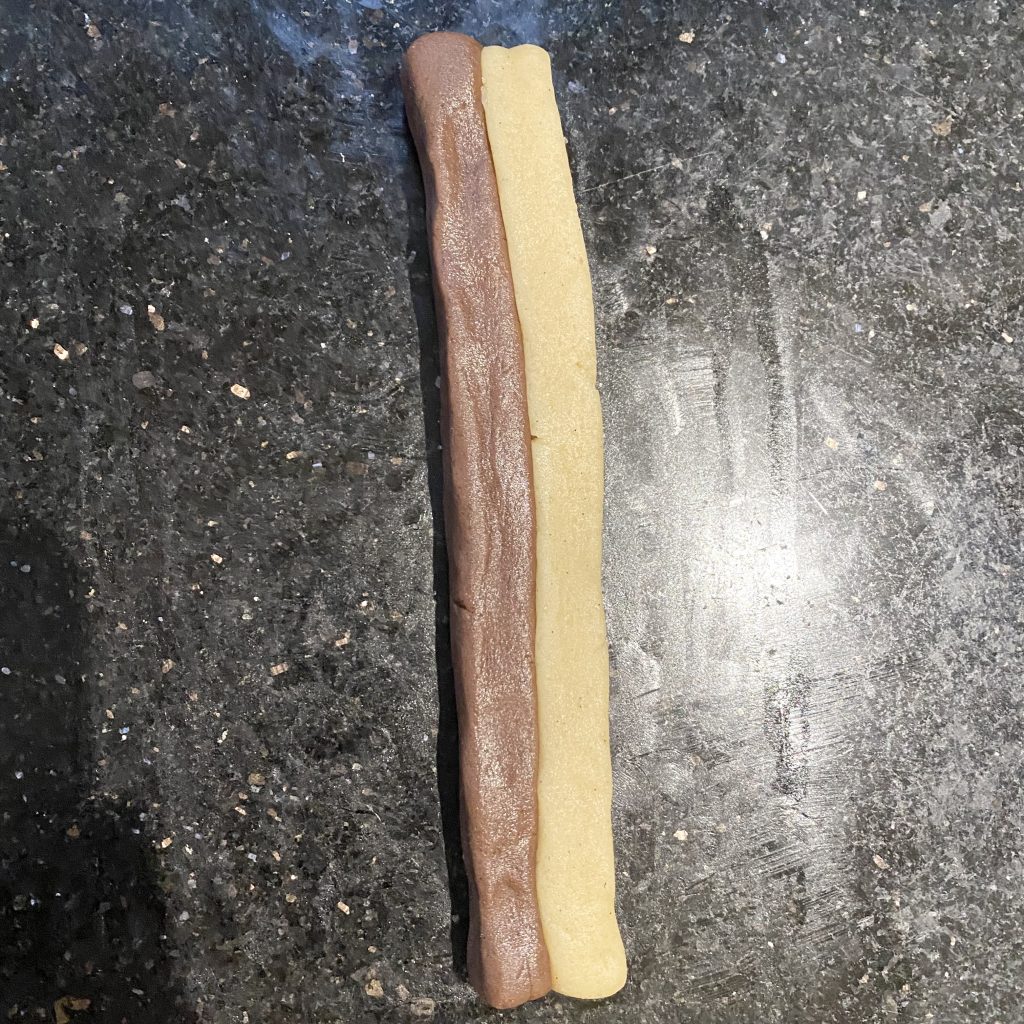
Place one vanilla log alongside one chocolate log and press them together, being careful not to distort the shapes too much.

Then, add the second vanilla log on top of the chocolate log and the second chocolate log on top of the bottom vanilla log, pressed against each other along the middle so that you have a 2×2 design, with the logs of each colour in opposite quadrants. Gently press all of the logs together so that there are no gaps between them.
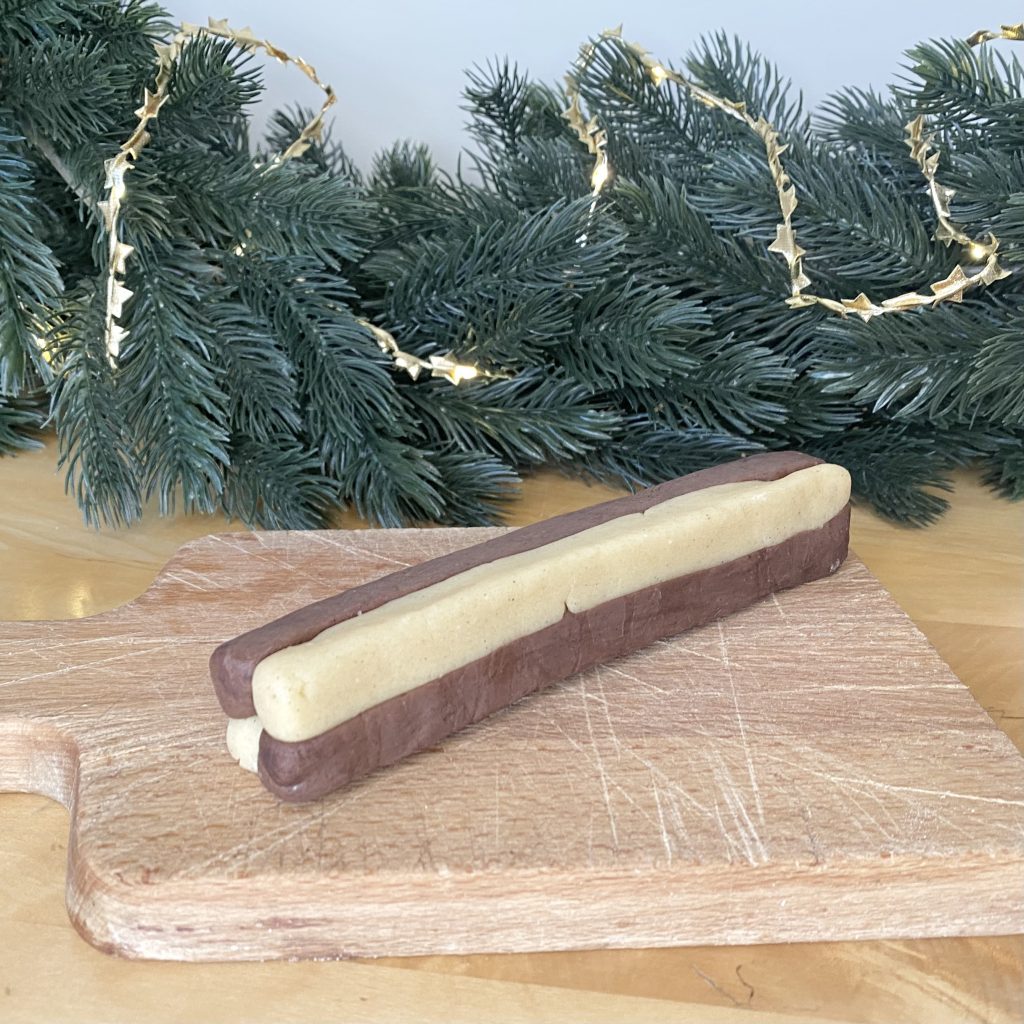
Wrap the log tightly in clingfilm, then use the bench scraper again to press gently on each of the sides a few times to really square them off.
Transfer the log to the fridge and allow it to chill for at least 2 hours before slicing. This ensures that they are firm enough to slice without disturbing the checkerboard pattern (and means that the cookies won’t spread too much during baking!).
Slicing and Baking the Cookies
Once the cookie logs have chilled, it’s time to slice & bake them!
Start by preheating the oven to 180°C (conventional oven, not fan) and lining a baking tray with greaseproof paper.
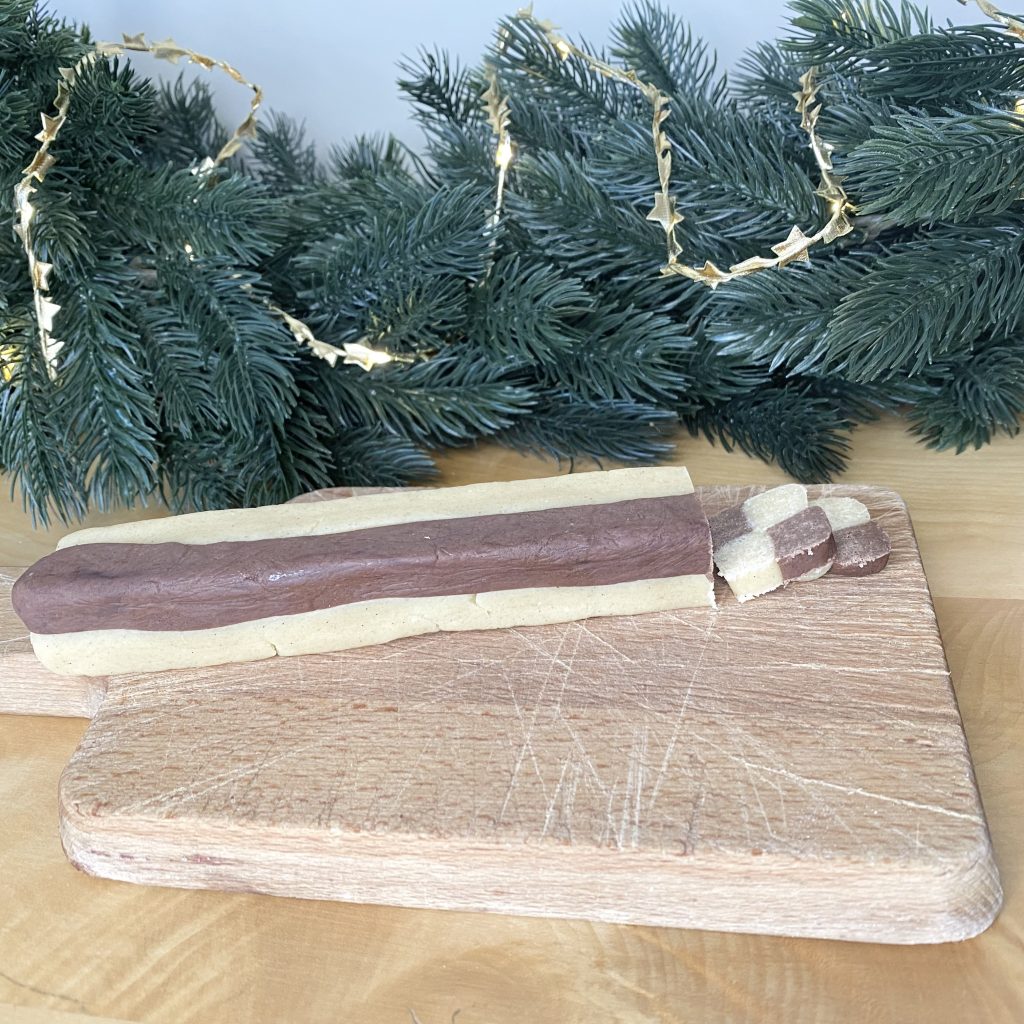
Remove the schackrutor log from the fridge and use a small, sharp knife to cut it into slices, about 5-7mm thick (don’t worry too much about getting them perfect, just try your best so that they bake pretty evenly!).
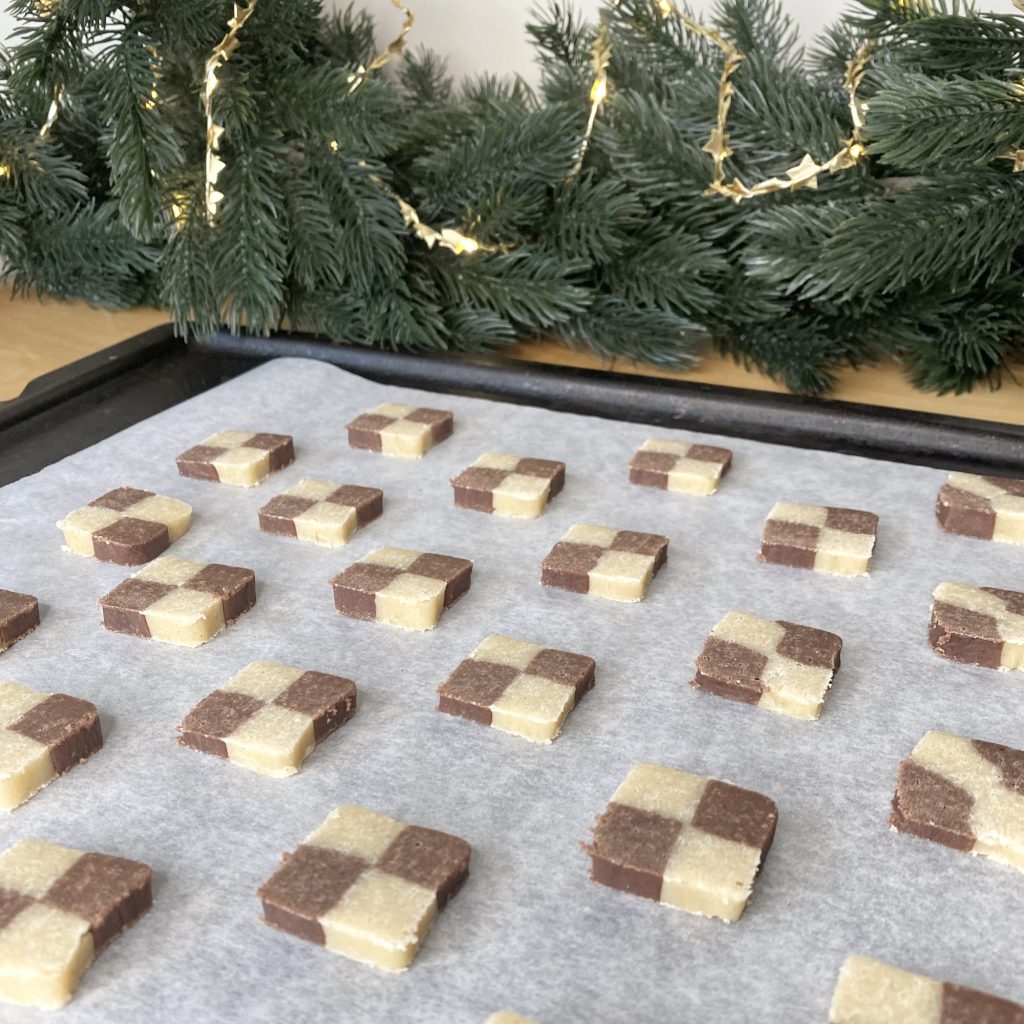
Space the cookies out onto the prepared baking trays (they won’t spread too much, but it’s best to leave a little space between them, just in case!).
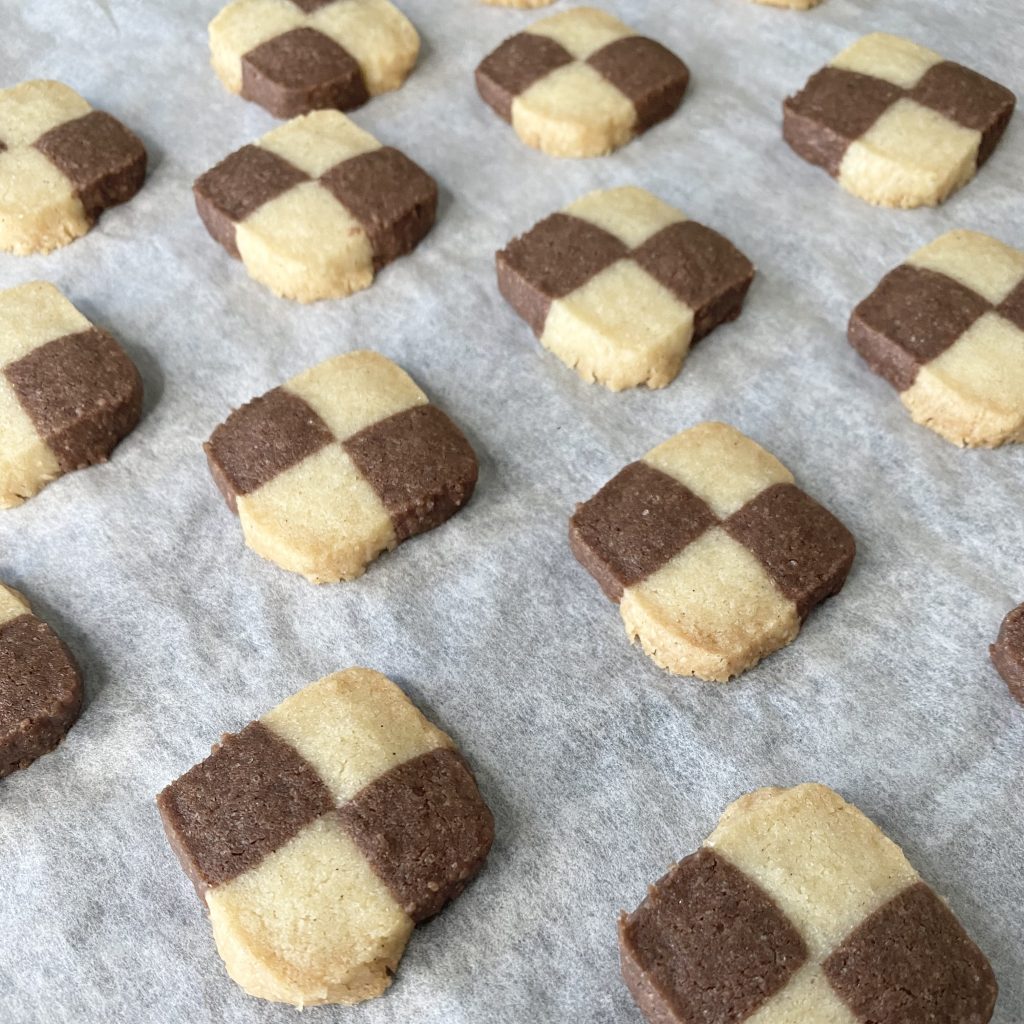
Then, it’s time to bake the schackrutor! They’ll need about 6-8 minutes in the preheated oven, just until the edges are starting to turn golden.
Once baked, leave them to cool for 5 or so minutes on their trays, then carefully transfer them to a wire rack to cool completely.
Storage Instructions
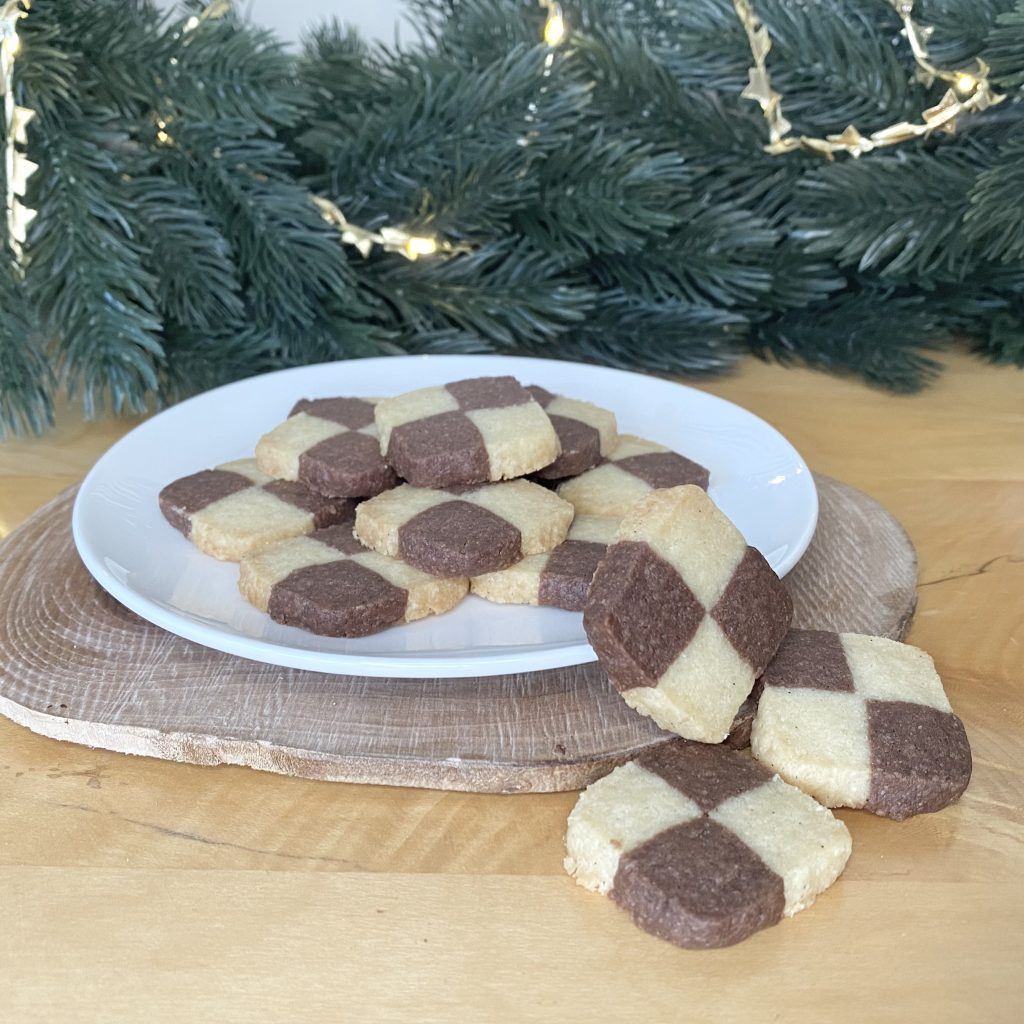
The schackrutor need to be stored in an airtight container at room temperature. They’ll keep for about 3 days before they start going a bit soft (still tasty, just not quite as crisp!).
Final Thoughts
I LOVE these little checkerboard cookies! They dough itself is very similar to the one I use for my 5-Ingredient Iced Star Biscuits, but it really shows how versatile it is, because the two cookies have such different vibes.
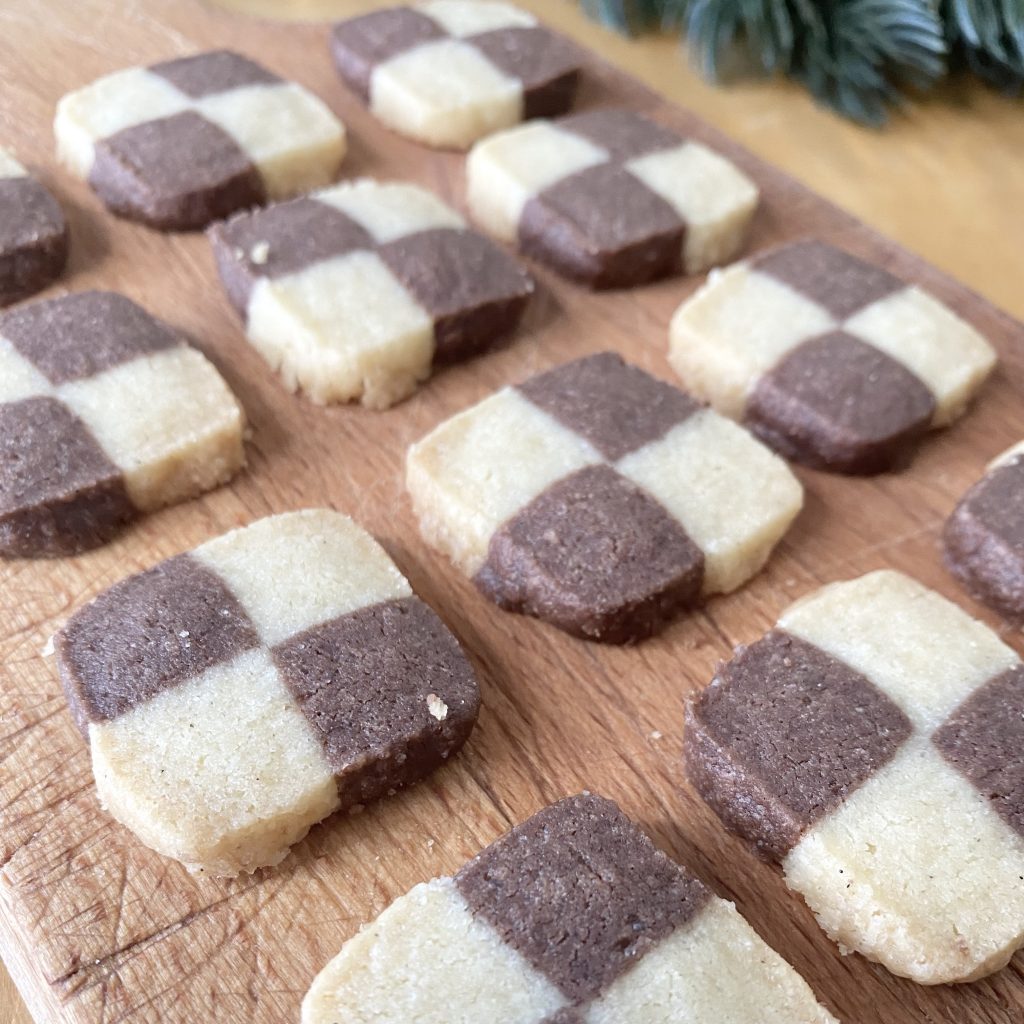
Also… these cookies are SO much smaller than I expected them to be! As in, they really are bitesize. You could definitely make them bigger if you wanted to (by making taller/wider logs, or even stacking more logs together, which I’m very interested in having a go at), but I do kind of love how tiny they are, it makes them feel so cute and dainty.
These are a simple cookie, elevated to something surprisingly impressive by just a little cocoa powder and a bit of shaping, which I think is pretty magical! I also like that you can form the log, get everything ready, then slice and bake the cookies when you want to serve them, so your family/friends can enjoy some delicious, fresh biscuits.
Recipe
Swedish Schackrutor
Equipment
- Baking tray lined with greaseproof paper.
- Bench scraper/clean metal ruler, for squaring off the biscuit dough.
Ingredients
- 25 g caster sugar
- 50 g salted butter, softened.
- 75 g plain flour
- 1/4 tsp vanilla bean paste
- 1/2 tbsp cocoa powder
Instructions
- Place the sugar, butter, flour and vanilla bean paste into a food processor. Pulse until a dough forms.
- Weigh the dough and divide it in half evenly.
- Knead the cocoa powder into one half of the cookie dough until no streaks of vanilla dough remains.
- Divide the vanilla dough into two equal balls. Form each ball into a square log (use a bench scraper/clean metal ruler to really square off the edges), about 1 x 1 x 17cm. Set aside, then repeat with the chocolate dough, so that you have four logs. Do not add any extra flour/cocoa powder at this stage— you need the dough to be slightly sticky.
- Press one vanilla log against one chocolate log. Place the second vanilla log on top of the first chocolate log, then the second chocolate log in the remaining space, on top of the first vanilla log. Press the logs together gently so they stick.
- Wrap the log tightly in cling film and use a bench scraper to press up against the sides and make it super square. Place the log into the fridge to chill for 2 hours before slicing and baking.
- Preheat the oven to 180°C (conventional, not fan).
- Cut the log into approx. 5-7mm slices. Space the cookies on lined baking trays and bake in the preheated oven for 6-8 minutes, until just starting to turn golden around the edges.
- Allow the cookies to cool for 5 minutes on the trays, then transfer to a wire rack to cool completely before enjoying. The cookies can be kept in an airtight container at room temperature for about 3 days before they start going soft.
Sources Used
Books:
Crumbs: Cookies and Sweets from Around the World, Ben Mims.
ScandiKitchen: Fika and Hygge, Bronte Aurell.
Websites:
Daily In-A Kitchen: 3×3 Checkerboard Cookies
Totally Swedish: Brysselkex and Schackrutor
True North Kitchen: Swedish Checkerboard Cookies